Workforce retention at enterprise scale

Workforce retention at enterprise scale
The problem
Workforce retention data lived in fragmented HR systems across dozens of operating units. Leadership needed one place to monitor attrition trends, compare accounts, and act before churn became a pattern — not a quarterly surprise in a spreadsheet.
Why it matters
Without a centralized model, each team reported differently, manual Excel cycles burned analyst hours, and interventions came too late to change outcomes.
Approach
Azure Data Factory ingested HR exports from 40+ BPO client accounts into SQL Server — each operating unit with different schemas and reporting cadences. Star-schema modeling gave one consistent grain for headcount and attrition events, so leadership could compare accounts without reconciling incompatible spreadsheets.
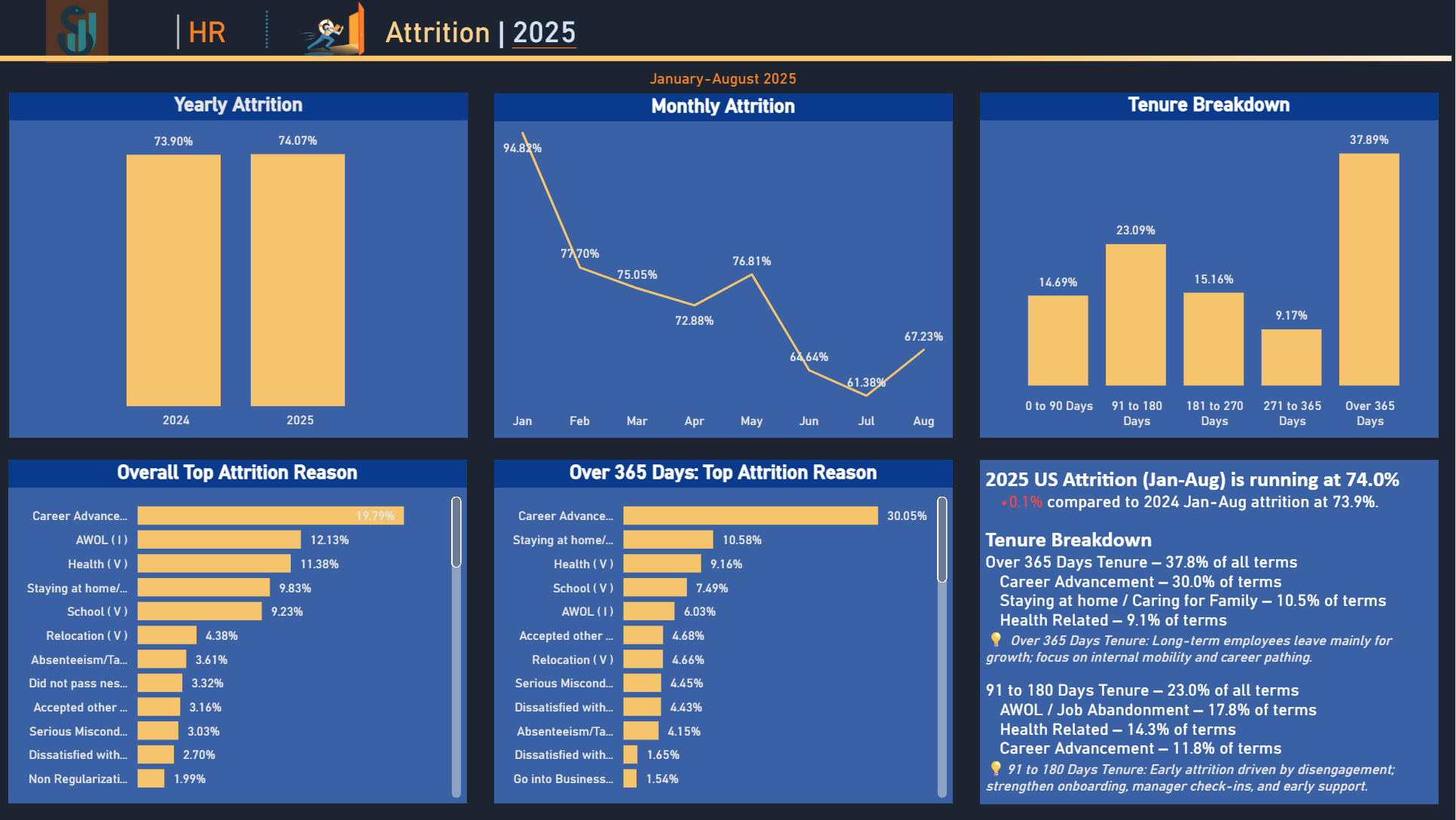
Power BI layered DAX measures for cohort retention, attrition forecasting, and drill-through by account and dimension. Weekly manual Excel cycles were replaced with a shared operational view operations could actually act on.
Outcome
The production dashboard replaced fragmented reporting and gave operations a shared retention language. This portfolio embed is a static, anonymized snapshot — not a live connection to client HR systems. Open the report to explore cohort trends, forecasting views, and account-level drill-through.
Technical details
ADF scheduled ingestion from decentralized HR sources into a single SQL warehouse.
Star schema: shared dimensions across 40+ accounts with different upstream formats.
DAX cohort retention and forecasting measures built on the semantic model.
Public embed is anonymized and static; production connected to live client HR feeds.
See the live dashboard or report this write-up describes.
Open Power BI report